Color cosmetics manufacturers can suit private label brands when they combine manageable order quantities, established formulas, shade development, packaging sourcing, testing, and export documentation under one production program. A brand ordering 3,000 units across 6 shades has very different cash requirements from one forced into 10,000 units per shade. Supplier capability also affects compliance: under the U.S. Modernization of Cosmetics Regulation Act of 2022, facilities subject to registration must renew every 2 years, while product listings require annual updates. A useful manufacturer therefore reduces inventory exposure while supplying the technical records needed for regulated markets.
Private label makeup is more complicated than attaching a logo to an existing tube. One liquid lipstick can involve the bulk formula, pigments, bottle, applicator, wiper, cap, label, carton, batch code, printing method, fill weight, and shade reference. A collection containing 8 shades may therefore require dozens of specifications before production starts.
That complexity makes supplier organization more important than a headline unit price. A quotation of $1.20 per unit can become less attractive if packaging requires 10,000 pieces while the formula MOQ is only 3,000. Brands should request separate quantities for bulk formula, each shade, primary packaging, decoration, and cartons before comparing offers.
The same calculation applies to assortment planning. If a brand launches 8 lipstick shades at 3,000 units each, the first order contains 24,000 finished units; at 10,000 per shade, inventory rises to 80,000 units before sales data exists. Search terms such as low MOQ cosmetic manufacturers China are often used by smaller brands trying to reduce that opening inventory commitment.
A lower MOQ is most useful when it applies to each shade and packaging component, not only to the total production order.
Once order quantities are clear, formula ownership needs equal attention. Stock formulas normally require less development work because the base has already been produced and tested. Semi-custom programs may adjust shade, viscosity, fragrance, pigment loading, finish, or selected ingredients, while a fully custom formula can involve several laboratory rounds and additional compatibility work.
For a 6-shade foundation range, one approved base does not eliminate shade development. Iron oxide ratios can affect undertone and visible coverage, while changes in pigment concentration may also influence viscosity and spread. Brands should approve every commercial shade against a controlled reference rather than approving only the lightest and darkest samples.
The sampling record should state version numbers, date, shade code, packaging used, and requested changes. If Sample V3 dated May 2026 is approved, production should reference V3 rather than an informal description such as “the warmer version.” Simple documentation becomes more useful when a brand repeats the order 6 or 12 months later.
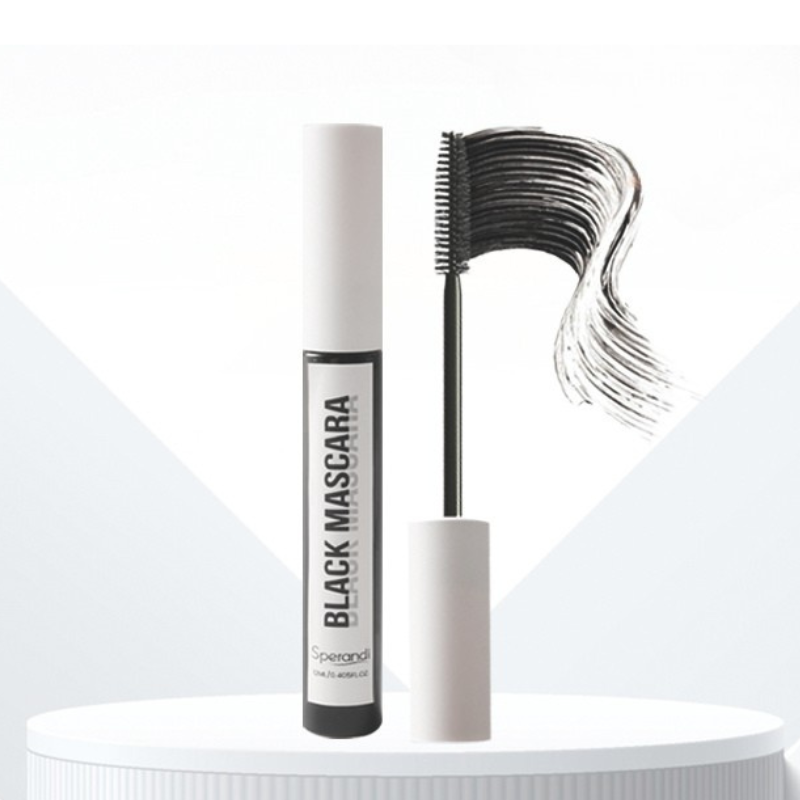
Packaging should then be tested with the actual bulk product. A formula that remains stable in laboratory glass does not automatically behave the same way inside a commercial bottle. Oils can affect some plastics or seals; solvent-containing formulas can influence decoration; mascara performance can change when the brush and wiper dimensions are altered by fractions of a millimeter.
A practical pre-production check can include:
-
fill weight across 20–30 units;
-
leakage after upright, inverted, and horizontal storage;
-
applicator pickup after repeated opening and closing;
-
shade comparison against the approved standard;
-
printing adhesion after normal handling;
-
cap torque or closure fit;
-
appearance after elevated and room-temperature storage.
Testing requirements also depend on the market where the product will be sold. ISO 22716:2007 covers good manufacturing practices for cosmetic production, control, storage, and shipment, and the standard was reviewed and confirmed in 2022. Buyers can ask whether the supplier's procedures are aligned with ISO 22716 and request evidence rather than relying on a logo in a sales presentation.
For products entering the U.S., MoCRA has added several obligations that private label brands should understand before artwork and production are approved. FDA states that covered cosmetic manufacturing and processing facilities must renew registration every 2 years, and changes to registration information generally require updates within 60 days. Product listings must also be updated annually.
FDA reported in February 2026 that more than 14,000 cosmetic product facilities were registered. That number gives buyers a useful reason to verify registration information themselves rather than treating registration as an unusual qualification. A supplier selling into the U.S. should also be able to provide ingredient information and manufacturing records needed by the responsible person.
MoCRA also requires a responsible person to report a serious adverse event to FDA within 15 business days. Additional medical or other relevant information received within 1 year of the original report must also be submitted within 15 business days. Batch coding, complaint records, retained samples, and traceable production data therefore matter after the goods leave the factory.
European distribution adds a different documentation structure. Regulation (EC) No 1223/2009 requires a responsible person and a cosmetic product safety assessment before the product is placed on the market. The Product Information File must be retained for 10 years after the final batch was placed on the market.
A supplier does not replace the responsible person or safety assessor, but it can make the process easier by providing complete and consistent technical files. Missing INCI information, incomplete raw-material specifications, or an outdated manufacturing statement can delay assessment even when the physical product has already been produced.
| Item to request | What it helps verify |
|---|---|
| Full INCI list | ingredient review and label preparation |
| Product specification | appearance, odor, viscosity, fill weight |
| Batch/COA records | repeat-order consistency |
| Microbiological results | finished-product quality |
| Stability data | performance during expected storage |
| Packaging compatibility data | formula-component interaction |
| GMP documentation | manufacturing controls |
| Shade standard | repeat production accuracy |
For European sales, the CPNP is the notification system used under Regulation (EC) No 1223/2009. The European Commission states that once a product has been notified through CPNP, no additional national notification is required within the EU. That administrative setup makes accurate product and ingredient information important before launch.
Compliance documents are only one part of supplier evaluation. Production capacity should be examined before a successful SKU outgrows its first order. A factory capable of filling 5,000 lip glosses for a launch may still struggle with a repeat purchase of 100,000 units if the same line is shared among many customers during peak periods.
Brands can ask for line-specific information rather than one annual capacity number: daily filling output, batch vessel size, number of lipstick molding lines, powder presses, filling heads, assembly stations, and typical utilization. A stated annual output of 20 million units tells little about whether a 60,000-unit mascara order can be completed in the requested month.
Lead time should also be separated into stages. A project described as “30 days” may exclude formula approval, custom-color packaging, printing plates, carton proofing, or inbound component inspection. A more useful schedule records sampling, artwork approval, packaging procurement, bulk production, filling, assembly, final inspection, and shipment preparation as separate dates.
For example, 10 days for sample approval plus 25 days for packaging and another 20 days for filling and assembly creates a 55-day sequence if the steps cannot overlap. Asking which activities can begin after formula approval helps the buyer see where schedule compression is realistic and where it would increase production risk.
Cost comparison works better in the same detailed format. A $0.15 saving on 20,000 units equals $3,000, but a packaging mismatch that leaves 5,000 unusable components can erase much of that difference. Buyers should compare landed product cost, tooling, sample charges, decoration setup, testing, inspection, spare components, and expected defect allowances together.
Third-party inspection can add another control point before shipment. A brand might inspect a statistically selected sample rather than opening every carton, checking appearance, quantity, labeling, shade identification, packaging function, and workmanship against an approved specification. The acceptance standard should be agreed before production, not after a disagreement occurs.
Repeat orders should use the same approved formula code, shade reference, packaging specification, artwork revision, and quality limits whenever the brand expects the product to match the previous batch.
Scalability becomes easier when records are maintained from the first production run. If a brand orders 4,000 units in 2026 and later increases the order to 40,000, retained samples and documented specifications provide the reference for color, texture, component fit, printing position, and fill weight. Verbal approval from an earlier project provides no comparable benchmark.
Product assortment can then expand without rebuilding every specification. A supplier already producing lipstick, gloss, concealer, blush, pressed powder, eyeliner, and mascara can reuse approved logo sizes, carton materials, coding rules, documentation formats, and inspection procedures across several SKUs. A 12-product launch still requires separate product approvals, but fewer administrative systems need to be recreated.
Supplier selection is therefore better handled through measurable questions: What is the MOQ per shade? Which processes are performed in-house? How many sample revisions are included? Which tests use final commercial packaging? What records are retained after production? Can the supplier support 5,000 units now and 50,000 later? Which documents are available for U.S. or European review?
The answers should appear in quotations, specifications, approved samples, test reports, or production records. Under EU rules, the Product Information File remains relevant for 10 years after the last batch enters the market, while U.S. facility registration operates on a 2-year renewal cycle. Manufacturing relationships built around traceable records are easier to maintain when product volumes and regulatory responsibilities increase.